What is astigmatism?
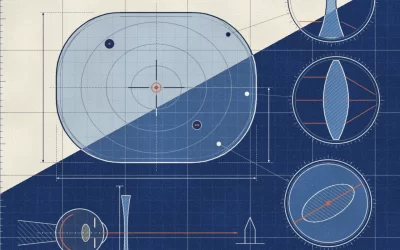
With astigmatism, your cornea—or sometimes your lens—is not perfectly round but slightly oval, a bit like a rugby ball. As a result, light is refracted more strongly in one direction than in the other. This means you don’t see a single sharp point, but rather an image that is slightly stretched or distorted, both at a distance and up close. Astigmatism is very common: many people have a mild form of it, often along with nearsightedness or farsightedness.
On your eyeglass prescription, astigmatism is listed as the cylinder (C or cyl) and the axis. The cylinder indicates the severity of the condition, while the axis, measured in degrees from 0 to 180, indicates the direction of the astigmatism. Astigmatism is usually congenital and often remains relatively stable for many years. If it changes significantly over a short period of time, it’s wise to discuss this with your primary care physician. A specific form of astigmatism is keratoconus, in which the cornea gradually becomes thinner and more cone-shaped. This requires special lenses, which we do not fit; in such cases, we will refer you to a specialist.
How can you tell if you have astigmatism?
With a low cylinder, you often don't notice much. With a higher cylinder, or if your glasses are no longer the right prescription, you may experience symptoms like these:
- Your vision is blurry or distorted at any distance;
- Lines in one direction appear sharper than in the other;
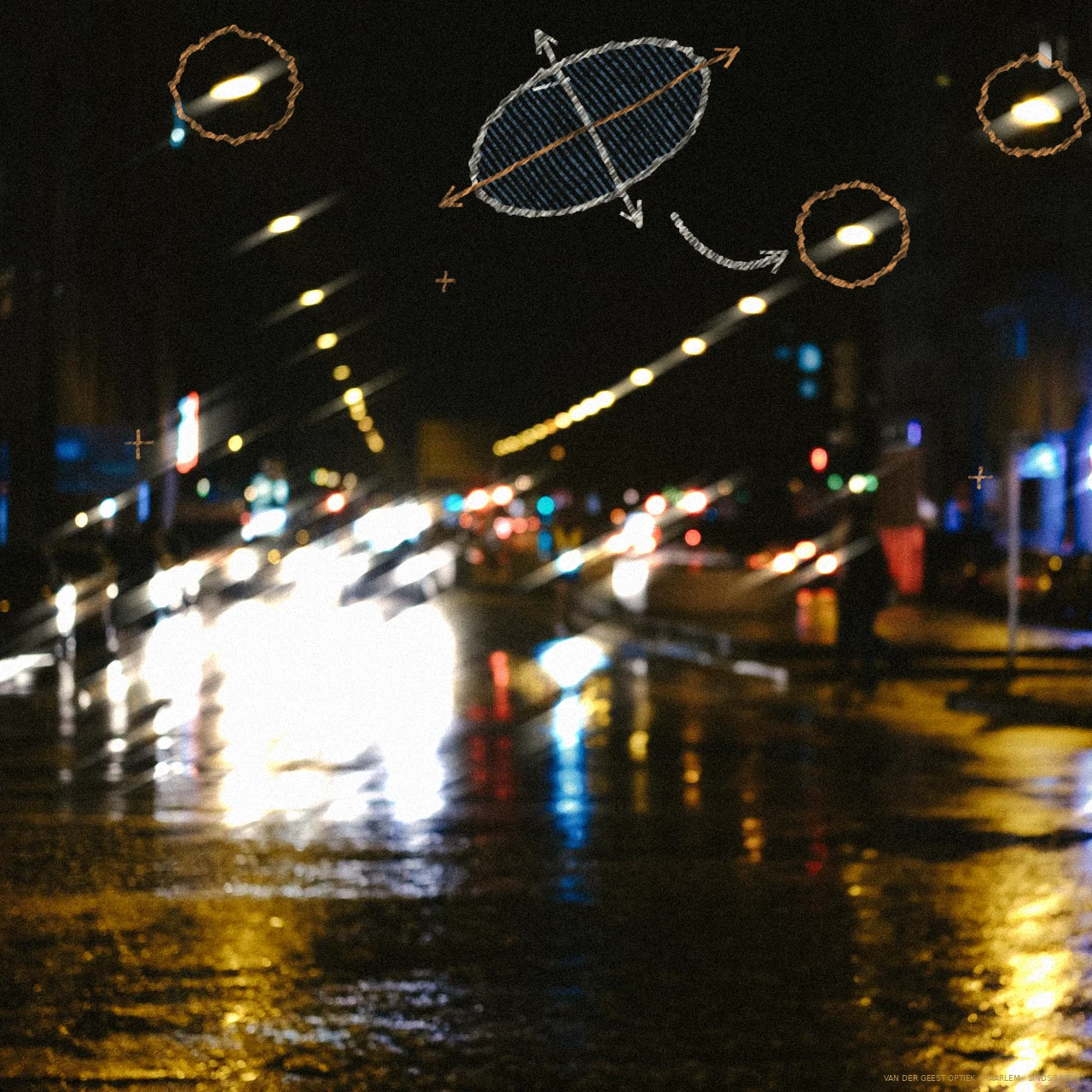
- Around the taillights and headlights, you can see streaks or trails in the evening;
- your eyes feel tired or you get headaches, especially when reading or working on a screen;
- You squint to see more clearly.
During an eye exam, we carefully measure the cylinder and the axis for each eye. We also ask about your work, your hobbies, and your reading distance, so that your glasses are tailored to how you use your eyes.
Glasses or Contact Lenses for Astigmatism
In eyeglasses, we correct astigmatism with lenses in which the cylinder is oriented in the correct direction. That’s why those lenses must be positioned exactly right in the frame: even a slight rotation of the axis is noticeable. Using Nikon’s digital measuring stand and our in-house lens-grinding facility, we ensure that everything is just right. If this is your first time wearing lenses with a cylinder, or if your prescription has changed significantly, the world may feel slightly askew or different for the first few days. You’ll usually get used to it within a few days.
Astigmatism can also be effectively corrected with contact lenses—specifically, toric lenses. These lenses remain in a fixed position in your eye, ensuring that the cylinder is aligned correctly; read more under “Contact Lenses.” Off-the-shelf reading glasses from a drugstore do not account for astigmatism; custom-made reading glasses are a better option in this case. If you purchase your glasses or contact lenses from us, or if it turns out that you don’t need a vision solution or that we can’t help you further, the eye exam is free of charge; you can find all prices in our rate schedule.
Frequently Asked Questions About Astigmatism
The cylinder indicates the severity of your astigmatism, and the axis, measured in degrees (0 to 180), indicates the direction of the refractive error. Together, they ensure that your lens provides precise correction.
Usually not. Astigmatism is common and can be easily corrected with glasses or contact lenses.
Yes, with toric lenses. They stay in a fixed position in your eye, so that the astigmatism is properly corrected.
When you get a new or different lens, the world might seem a little askew for the first few days. You’ll usually get used to it within a few days. If it doesn’t go away, please stop by.
Does the world look a little distorted? You can find us at 86 Generaal Cronjéstraat in Haarlem. Call us at 023 5254 131 or schedule an appointment using the online calendar on our contact page.
This information is general in nature and is not a substitute for medical advice. Van der Geest Optiek does not currently employ an ophthalmologist or a college-trained optometrist. As certified opticians, we will examine your eyes and, if in doubt, refer you to your primary care physician. No rights may be derived from the information on this page or from any apparent errors or typos.