Why Driving in the Dark Is More Difficult
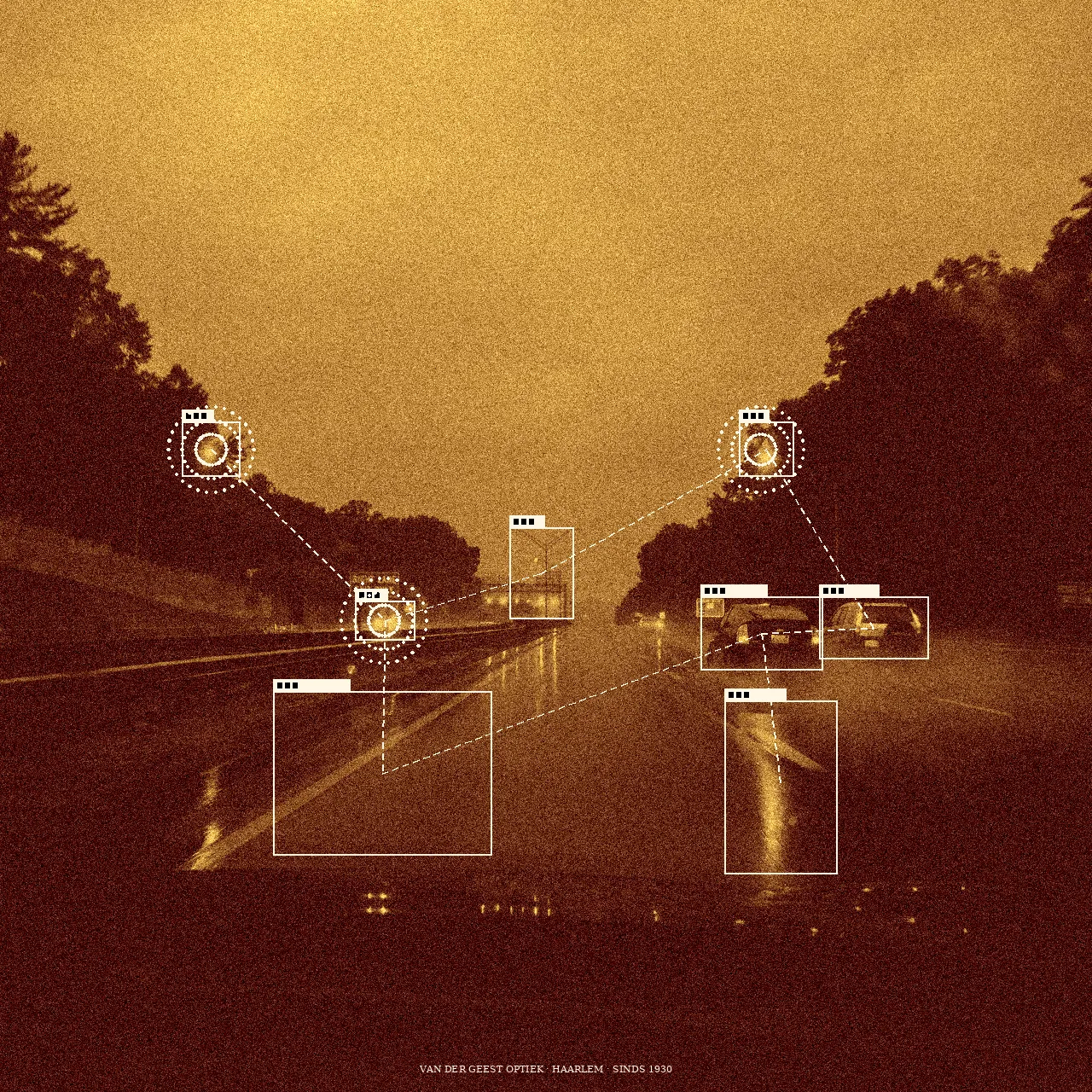
When driving at night, your pupils dilate to let more light into your eyes. As a result, minor blurriness becomes more noticeable: a slight difference in vision that you don’t notice during the day can make all the difference at night. In addition, you perceive less contrast in the dark. This makes it harder to see a cyclist without lights or road markings in the rain.
Glare also plays a major role. Oncoming drivers are increasingly using bright LED or xenon headlights, and light reflects off wet road surfaces, your windshield, and your eyeglass lenses. All these reflections combined mean that your eyes need a moment to recover after an oncoming vehicle passes. That recovery time also gets longer as you get older.
Here's how a good pair of glasses can help you in the evening
The key is having glasses with the correct prescription. Are you driving with old glasses, or has it been a while since your last eye exam? If so, get your eyes checked first to make sure your prescription is still correct, including for distance vision.
In addition, a good anti-reflective coating makes a big difference. Without it, some of the light reflects off your lenses, which you see as bright spots and streaks around headlights and streetlights. With a good anti-reflective coating, more light actually passes through the lenses. Do you drive a lot in the dark, for example, for work? If so, we also offer lenses with a special driving coating from Nikon. This coating reduces some of the glare from headlights while still allowing you to see the road clearly. We’d be happy to discuss with you whether this is a good fit for you.
What does the law say, and when should you see your family doctor?
To obtain a Class B driver’s license, you must have a visual acuity of at least 0.5 with both eyes together. This requirement can also be met with glasses or contact lenses. If you need them to meet this requirement, your driver’s license may include a “01” code, and you must wear your glasses or contact lenses while driving. Check the CBR website for the exact rules. Here’s a helpful tip: keep a spare pair of glasses in your car. If your glasses break while you’re on the road or you’ve forgotten them, you can still continue driving safely.
Not all problems with driving at night are caused by your glasses. Is your vision getting increasingly blurry, do colors appear duller, or do you see large halos around lights? These symptoms could be signs of cataracts, for example. Dry eyes can also cause your vision to become blurry in the evening. We do not make diagnoses and currently do not have an ophthalmologist or a college-trained optometrist on staff. If you have these symptoms, or if you’re unsure, please contact your primary care physician, who will refer you to an ophthalmologist if necessary.
Frequently Asked Questions About Driving at Night
In the dark, your pupils dilate. As a result, minor imperfections in your prescription become more noticeable, and you see less contrast. An eye exam will show whether your prescription is still accurate.
Anti-reflective coating reduces reflections on your eyeglass lenses, such as bright spots and streaks around headlights. This allows you to see more clearly and comfortably. Of course, the bright light from oncoming traffic itself remains unchanged.
Yes. We offer lenses with a special anti-glare coating from Nikon that reduces some of the glare from headlights. We'd be happy to discuss in the store whether this is right for you.
That depends on your visual acuity. If your driver’s license has a code 01 on it, you must wear glasses or contact lenses while driving. Not sure if you still meet the requirement? Then have your eyes checked.
Do you find that driving at night is getting harder? Make an appointment for an eye exam in Haarlem, or stop by our office at 86 Generaal Cronjéstraat. We’ll work with you to find the right glasses and lenses that will let you drive comfortably again at night.
No rights may be derived from the information on this page or from any apparent errors or typos. The information is general in nature and is not a substitute for medical advice. Are you experiencing eye problems? If so, please contact your family doctor.