Are you suddenly seeing double? Call your doctor or the after-hours medical service right away. If you also have a crooked mouth, trouble speaking, or a paralyzed arm or leg, call 112.
What is double vision?
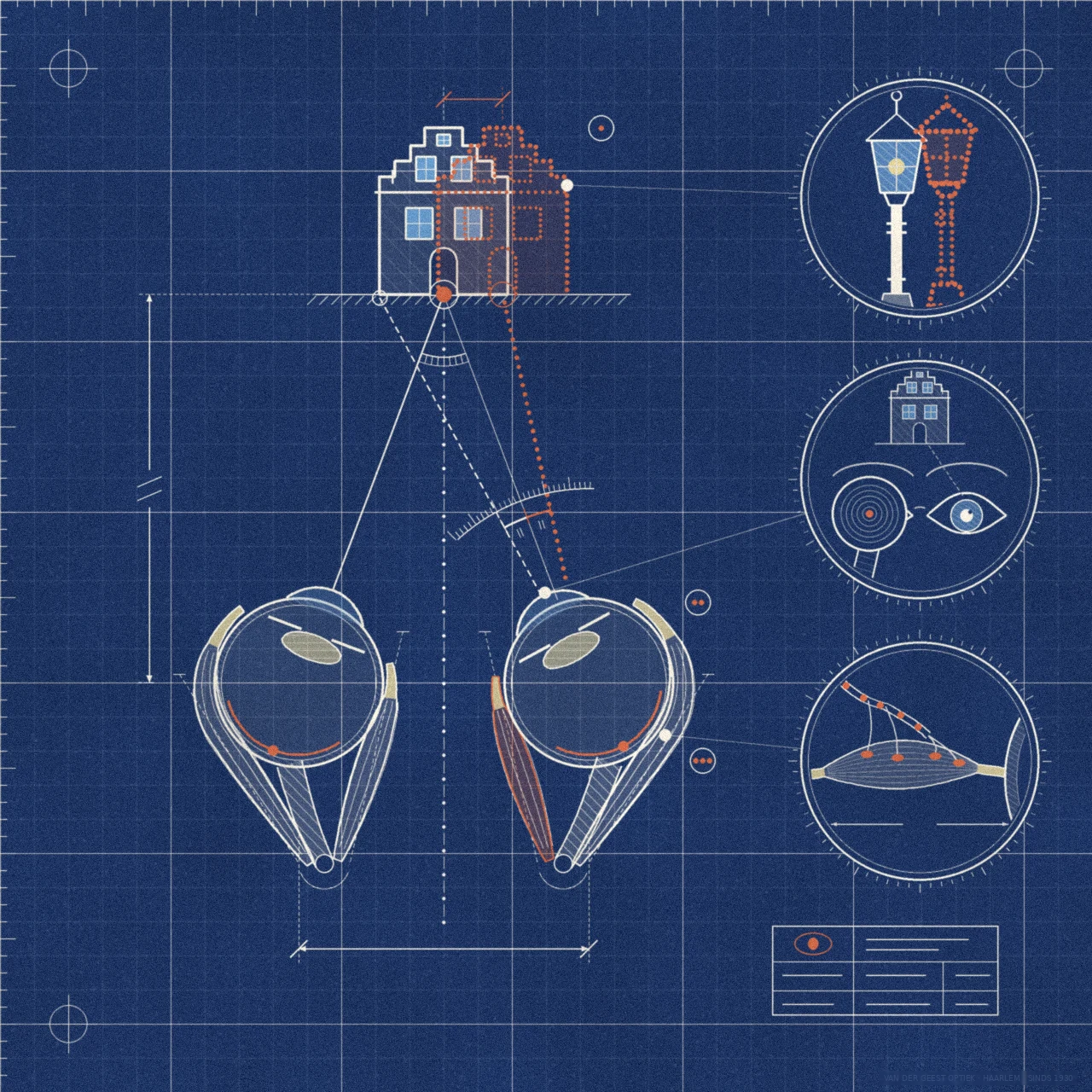
Double vision causes you to see two images of the same object. The images may appear side by side, one above the other, or at an angle to each other—sometimes partially overlapping. Doctors call this diplopia. Double vision makes everyday tasks difficult, especially judging distances. As long as you have double vision, you should not drive a car or participate in traffic.
You can get an initial indication by covering one eye. If the double images disappear when you do this, it’s binocular double vision. This is the most common form and is usually caused by your eyes not working together properly. If the double images persist when the other eye is closed, it’s called monocular double vision. In that case, the cause usually lies within the eye itself.
Monocular double vision may be caused by an abnormality of the cornea or the lens, such as a cataract. Astigmatism can also cause double vision in one eye. This cover test is only a preliminary assessment and is not a substitute for a medical examination.
Possible causes of double vision
Binocular double vision is often related to the eye muscles or the nerves that control them. Examples include strabismus that develops later in life, tired eye muscles, or optic nerve damage. Thyroid eye disease, diabetes, head injury, or a concussion can also cause double vision. In addition, alcohol, drugs, and certain medications can temporarily cause double vision. If you’re taking any medications, check the package insert to see if double vision is listed as a side effect.
It’s important to understand how double vision develops. If it occurs suddenly, it could indicate a serious condition, such as a TIA or a stroke. In that case, contact your primary care physician or the after-hours medical service immediately—do not wait. If the double vision develops slowly or gradually worsens, you can schedule an appointment with your primary care physician or an eye exam with us. If it began after a fall on your head, always see your primary care physician first. They will assess your symptoms and, if necessary, refer you to an ophthalmologist or another specialist.
Diagnosis, Treatment, and What We Can Do
At the hospital, an orthoptist and an ophthalmologist will examine the alignment of your eyes, the coordination between both eyes, and the movements of your eye muscles. Treatment depends on the cause. Sometimes the underlying condition is treated first. For problems with eye coordination, options include prisms in glasses, treatment by an orthoptist, or strabismus surgery. Temporarily covering one eye can also help reduce symptoms.
During a standard eye exam at Van der Geest Optiek, we briefly assess whether a prism might be needed. We only conduct further testing ourselves for adults who actually experience double vision in their daily lives; a prescription from an orthoptist or ophthalmologist is preferred in such cases. A prism can be incorporated into the eyeglass lens or, for example, to try it out first, applied to your lens as a temporary adhesive prism (Fresnel prism). If you suddenly start seeing double, you should always see your primary care physician first. Read more about prisms and how your eyes work together on our page about fixation disparity. If you’d like to read more about the causes of double vision, the Oogfonds provides a clear overview.
Frequently Asked Questions About Double Vision
If you suddenly experience double vision, call your family doctor or the after-hours medical service immediately. If you also have a drooping mouth, trouble speaking, or a paralyzed arm or leg, call 112.
In that case, it's binocular double vision: your eyes aren't working together properly. If the double images persist even when you close one eye, the cause is usually in the eye itself.
No. As long as you're seeing double, don't drive a car or participate in traffic.
Sometimes, yes. Prisms in glasses can reduce double vision, and if you have astigmatism, prescription glasses can help. First, though, it’s important to determine the cause.
Do you have questions about your eyes or your glasses? You can find us at 86 Generaal Cronjéstraat in Haarlem. Call us at 023 5254 131 or schedule an appointment using the online calendar on our contact page.
This information is general in nature and is not a substitute for medical advice. Van der Geest Optiek does not currently employ an ophthalmologist or a college-trained optometrist. As certified opticians, we will examine your eyes and, if in doubt, refer you to your primary care physician. No rights may be derived from the information on this page or from any apparent errors or typos.