What is fixation disparity?
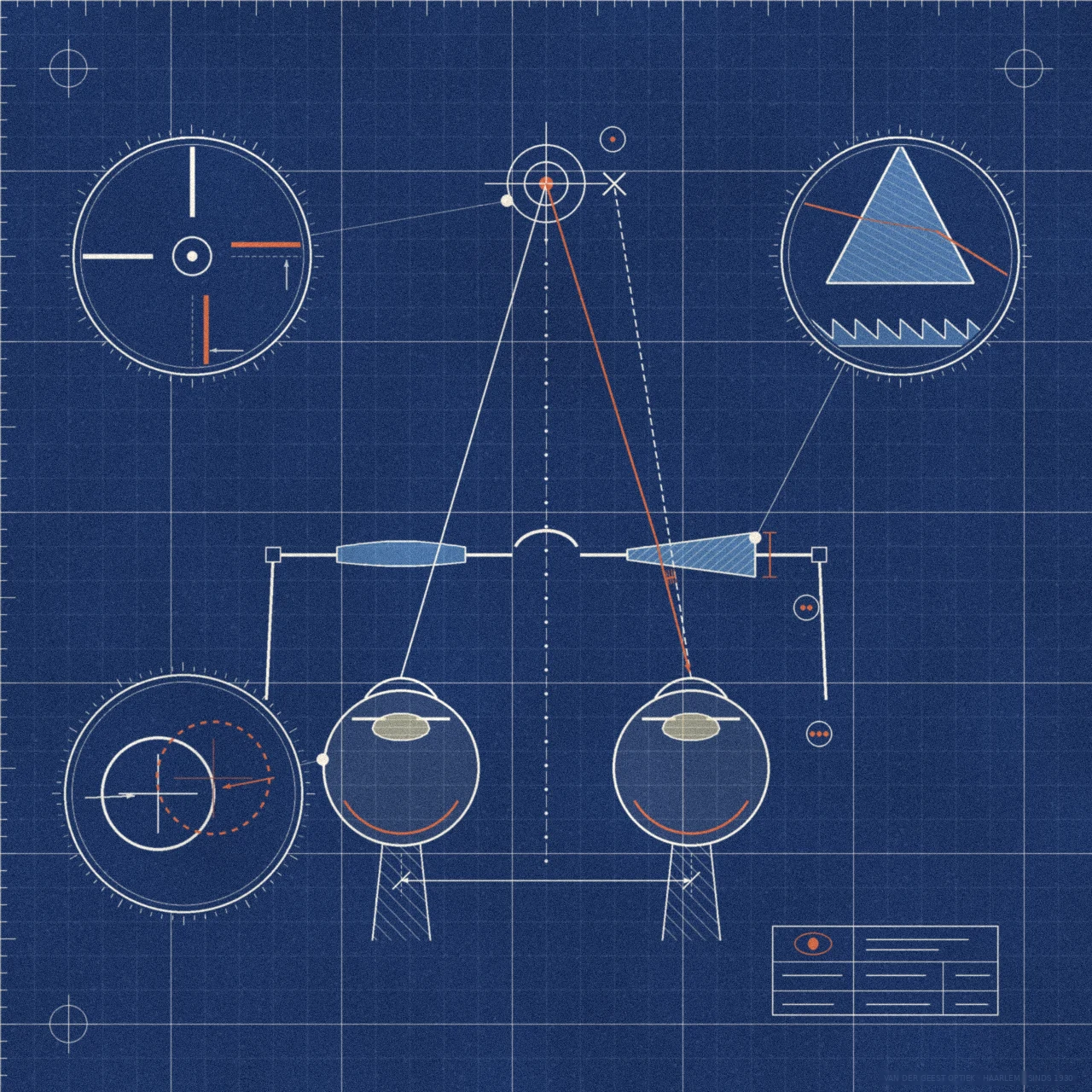
When you look at something, both of your eyes focus on exactly the same point. Your brain then combines the two images into a single, sharp image. With fixation disparity, this process doesn’t quite work: the eyes deviate from each other just a tiny bit. You usually still see a single image, but your eyes and brain have to work extra hard to keep it that way.
Fixation disparity is related to a latent tendency toward strabismus. Many people have this tendency to a mild degree without it causing them any trouble. Symptoms only arise when your eyes have to work too hard to coordinate. You often notice this especially when reading, working on a computer screen, or at the end of a long day.
What symptoms might you experience?
Symptoms vary from person to person and may also have other causes, such as a prescription that is no longer correct or dry eyes. Common signs include:
- tired or burning eyes when reading or working on a screen;
- headaches, especially above or behind the eyes;
- letters that seem to move or run into each other, or losing one's place on the line;
- difficulty concentrating on close-up work;
- double vision, for example, when you're tired.
Does this sound familiar? If so, start by getting your eyes checked. During the eye exam, we don’t just check your prescription; we also use binocular tests to see how your eyes work together. Often, the symptoms go away simply with the right prescription, or with glasses that are better suited to the distance at which you work, such as computer glasses.
Here's how we measure it and when a prism helps
During a routine eye exam, we briefly check to see if you might need prism correction. If we see any signs that you might, we’ll ask if you have any symptoms and whether you experience double vision in your daily life. If you don’t have any symptoms, we won’t prescribe prism correction. A prescription from an orthoptist or ophthalmologist is always preferred: bring it with you to your appointment, and we’ll remeasure your prescription with the prescribed prism included, so that both are exactly correct in your new glasses.
If, as an adult, you actually experience double vision in your daily life, we can conduct further tests ourselves. We do this using polarization tests: with polarization filters and special test images, we measure how accurately both of your eyes focus on a single point. In addition, we can use a prism adaptation test to see how your eyes respond to a prism and whether the deviation remains stable. To do this, we’ll first place a prism in front of your eye temporarily or attach a thin Fresnel prism to your lens. If that works well, we’ll incorporate the prism into your new lenses—either by ordering it along with your prescription or by deliberately grinding the lens with a slight offset. We only perform these prism tests on adults.
The best solution varies from person to person and from situation to situation. If we’re unsure, or if the symptoms don’t match what we’re measuring, we’ll refer you to a specialist through your primary care physician. Because a prism must be positioned exactly in the right spot in the lens, centering your lenses requires extra precision. Does your child have trouble reading or experience problems with eye coordination? If so, discuss this with your primary care physician, who will refer you to an orthoptist or ophthalmologist if necessary. Starting around ages 9 to 10, we can also measure your child’s prescription right here; read more about eye exams for children.
Frequently Asked Questions About Fixation Disparity
No. With fixation disparity, the eyes deviate only very slightly, and you usually still see a single image. However, it does require extra effort for your eyes to work together.
Only for adults who actually experience double vision in their daily lives, using polarization tests and a prism adaptation test. A referral from an orthoptist or ophthalmologist is always preferred, and if there is any doubt, we will refer you to a specialist.
Not always. Often, simply having the right prescription or glasses for the correct viewing distance is enough. Whether prisms are helpful depends on your symptoms and the test results.
Please bring your prescription and your current glasses. We'll remeasure your prescription, taking the prism into account, and incorporate both measurements precisely into your new lenses.
Do you suffer from eye strain or double vision? You can find us at 86 Generaal Cronjéstraat in Haarlem. Call us at 023 5254 131 or schedule an appointment using the online calendar on our contact page.
This information is general in nature and is not a substitute for medical advice. Van der Geest Optiek does not currently employ an ophthalmologist or a college-trained optometrist. As certified opticians, we will examine your eyes and, if in doubt, refer you to your primary care physician. No rights may be derived from the information on this page or from any apparent errors or typos.