What is keratoconus?
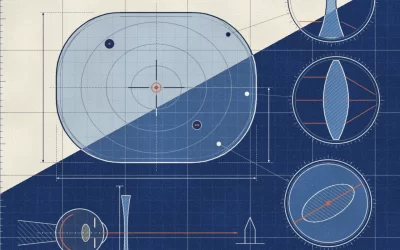
The cornea is the clear, curved window at the front of your eye. Together with the lens, it ensures that light falls precisely on your retina, as we explain in the section on how the eye works. In keratoconus, the cornea becomes thinner and weaker. As a result, it slowly bulges forward and takes on a cone shape. Light is then no longer properly refracted, causing your vision to become blurry or distorted.
Usually, both eyes are affected, though often one eye more than the other. The predisposition is often present from an early age, but symptoms usually begin around or after puberty. The condition progresses slowly and stabilizes for many people around age 40.
It is not known exactly how keratoconus develops. Heredity plays a role in only a small percentage of cases. Keratoconus is more common in people with asthma, allergies, or eczema. Rubbing your eyes frequently and vigorously can also contribute to its development or worsening. If you often experience itchy eyes, discuss this with your doctor instead of continuing to rub them.
Complaints: When Your Glasses Are Becoming Less Effective
The initial symptoms resemble those of a normal change in prescription. Your vision may be blurry or distorted, even when wearing glasses or contact lenses. In addition, your eyes may be sensitive to light, tire more quickly, or cause headaches. In the early stages, the sphere and cylinder values often increase. A cylinder corrects astigmatism, a condition in which your vision is slightly distorted at all distances.
One notable characteristic is that your prescription changes significantly over a short period of time. As a result, your glasses will need to be adjusted regularly at first. As the cornea continues to change shape, your vision will no longer be clear even with glasses. A new prescription will then help only briefly, if at all. Read more about other causes of blurred vision.
During an eye exam at our clinic, we measure your prescription and compare it to previous results. If we notice that your astigmatism is changing rapidly or that your vision isn’t improving enough with a new prescription, we’ll be honest with you about it. We do not make a diagnosis ourselves, but will refer you to an ophthalmologist through your primary care physician. An ophthalmologist can use a corneal scan to precisely map the shape and thickness of your cornea. Read more about the difference between an optician, an optometrist, and an ophthalmologist.
Treatment: The ophthalmologist determines
The ophthalmologist will determine which treatment is appropriate. In the early stages, your vision can often still be corrected effectively with glasses or soft contact lenses. If the shape of your cornea continues to change, special lenses are needed, such as rigid gas-permeable lenses or scleral lenses. To have these fitted, the ophthalmologist will usually refer you to a specialized contact lens specialist. That specialist will also check whether the lenses still fit properly.
If keratoconus progresses, the ophthalmologist may recommend cross-linking. This procedure strengthens the cornea using vitamin drops and UV light. The goal is to slow the progression of the condition, not to improve your vision. Sometimes other procedures are necessary, such as corneal ring implants. A corneal transplant is a last resort. Even after that, contact lenses are often still needed.
With keratoconus, regular checkups are important—often once or twice a year with an ophthalmologist or contact lens specialist. This allows them to detect any progression of the condition early on. You can help by avoiding rubbing your eyes. For more information about the condition and its treatments, visit the Oogfonds’s page on keratoconus.
Frequently Asked Questions About Keratoconus
In keratoconus, the cornea becomes thinner and weaker and gradually takes on a cone-like shape. As a result, your vision becomes blurry or distorted, even with glasses.
This is often the case at first, although the prescription will need to be adjusted regularly. As the cornea continues to change shape, your vision can no longer be properly corrected with glasses, and you'll need special contact lenses.
The ophthalmologist determines the treatment. For special lenses, the ophthalmologist will usually refer you to a contact lens specialist.
I'd rather not. Rubbing your eyes too much or too hard can contribute to the development or worsening of keratoconus. If you often have itchy eyes, talk to your doctor about it.
Have you noticed that your glasses aren't helping as much as they used to? You can find us at 86 Generaal Cronjéstraat in Haarlem. Call us at 023 5254 131 or schedule an appointment using the online calendar on our contact page.
This information is general in nature and is not a substitute for medical advice. Van der Geest Optiek does not currently employ an ophthalmologist or a college-trained optometrist. As certified opticians, we will examine your eyes and, if in doubt, refer you to your primary care physician. No rights may be derived from the information on this page or from any apparent errors or typos.