What is blue light, and what does a blue light filter do?
Blue light is a part of ordinary, visible light. The main source is the sun. In addition, the screens of your phone, tablet, and computer emit blue light, as do LED lights, but the light from a screen is much weaker than daylight. So during the day, you’re exposed to much more blue light outdoors than when you’re sitting at your laptop. Blue light isn’t all bad, either: during the day, it actually helps you stay awake and alert because it plays a role in your biological clock.
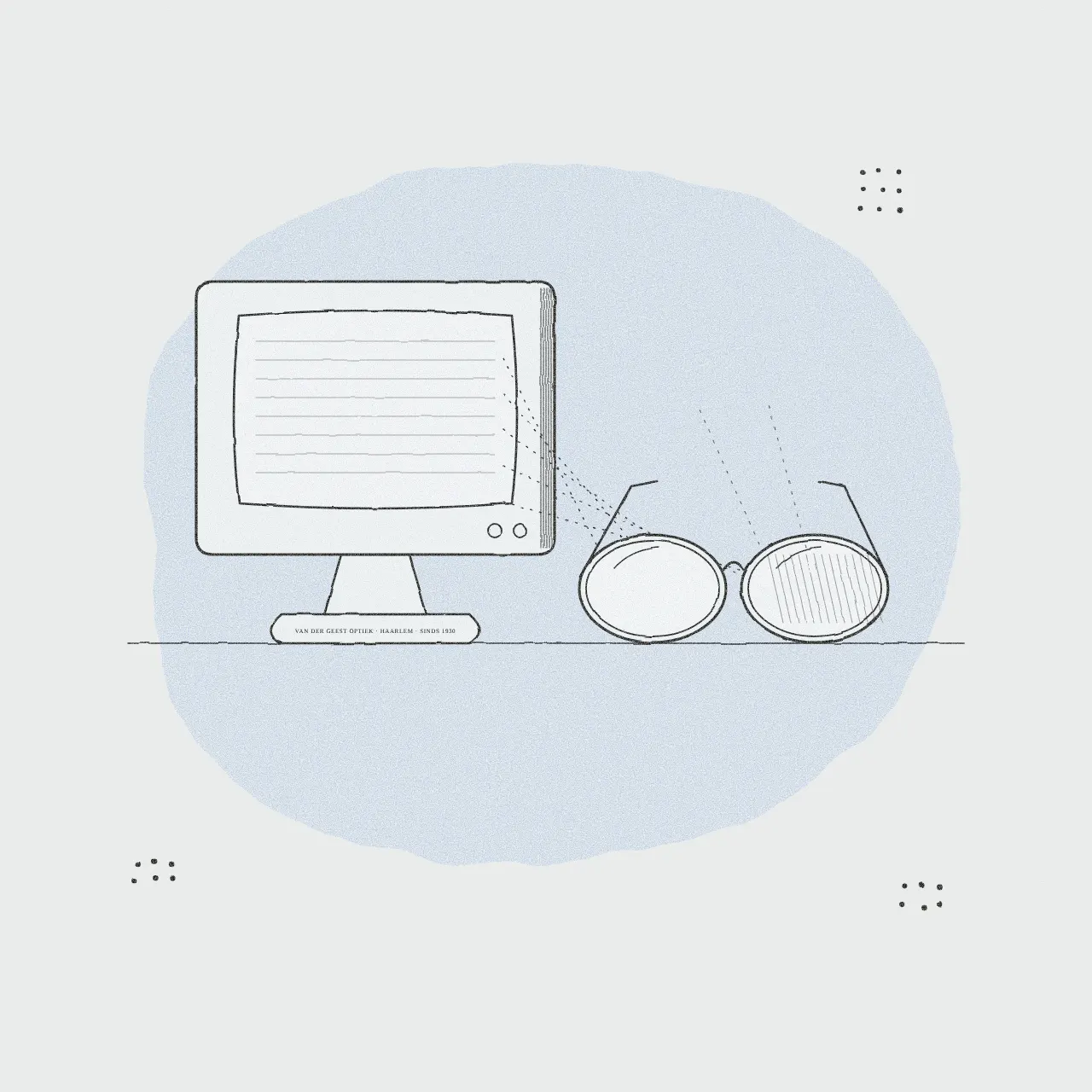
A blue light filter is a coating on your eyeglass lenses that blocks or reflects some of the blue-violet light. You choose the filter when ordering new lenses, along with your prescription, whether you’re getting single-vision lenses, progressive lenses, or lenses for computer glasses. You can often recognize the filter by a light blue or purple sheen on the lens, and with some filters, the world appears slightly warmer or more yellow. Some people find that these lenses make it more comfortable to look at a screen.
It’s not a miracle cure: there’s no evidence that a blue light filter reduces eye strain. A blue light filter is therefore just one of several options, alongside, for example, a good anti-reflective coating. Read more about all types of coatings on our page about eyeglass lens coatings.
Blue Light, Screens, and Your Sleep
Do you suffer from eye strain when looking at a screen? That’s usually not caused by blue light. When you’re concentrating on a screen, you blink less often and keep your eyes fixed at the same distance for a long time. Glare is also a factor, and sometimes your prescription is no longer correct. You can find out what does help on our page about eye strain and in the 20-20-2 rule. If you spend a lot of time working at a computer, computer glasses can be a good solution.
Children, too, are spending more and more time on tablets, phones, or laptops. According to the RIVM, children and teens who spend a lot of time looking at screens in the evening often sleep less and have poorer sleep quality. So put the screen away an hour before bedtime, have your child take regular breaks and avoid sitting too close to the screen, and make sure your child plays outside a lot. This is good for their eyes and helps them get a good night’s sleep.
Is a blue light filter right for you?
Do you spend a lot of time in front of a screen? If so, we’d be happy to offer you a blue light filter as an option with your new lenses. Just be aware that the filter isn’t a miracle cure: good anti-reflective coating, the right prescription, and taking regular breaks usually make a bigger difference. During your eyewear consultation, we’ll work with you to assess how you use your eyes, how many hours you spend in front of a screen, and which combination of lenses and coatings is best suited to your needs. That way, you’ll make an informed choice—not just because filters happen to be trendy.
Good to know: You choose a blue light filter when you order new lenses. It’s not possible to have a filter added to your current lenses after the fact, because the coating is applied when the lenses are manufactured. A blue light filter increases the price per lens, and we always discuss that additional cost in advance. Read more in our overview of how much glasses cost.
Wondering how much blue light your current lenses block? Bring your glasses to the store. We’ll measure it for you free of charge—and we’ll also measure how much UV light your lenses block.
Frequently Asked Questions About Blue Light Filters
Some people find that it makes watching a screen more comfortable. However, a large Cochrane review from 2023 does not clearly show that a blue light filter reduces eye strain caused by screen use. So it’s not a miracle cure.
There is no evidence to support that. According to the American Academy of Ophthalmology (AAO), blue light from screens has never been shown to be harmful. Eye strain from screen use is usually caused by reduced blinking, staring at the same distance for long periods, and glare.
Blue light in the evening can affect your body clock. It’s not yet clear whether a filter on your eyeglass lenses helps counteract this. In any case, putting your screen away an hour before bedtime helps.
No, that's not possible. A blue light filter is a coating that is applied when the lenses are manufactured. If you want a blue light filter, you'll need new lenses.
In most cases, yes—including multifocal lenses and lenses for computer glasses. During your lens consultation, we’ll work with you to explore your options.
Make a conscious effort to blink more often, follow the 20-20-2 rule, and make sure your glasses have the correct prescription and good anti-reflective coating. You can find more tips on our page about eye strain.
Are you unsure about a blue light filter? Stop by at 86 Generaal Cronjéstraat in Haarlem, call us at 023 5254 131, or schedule an appointment through the online calendar on our contact page. We’ll give you honest advice about your eyeglasses.
No rights may be derived from the information on this page or from any apparent errors or typos. The information is general in nature and is not a substitute for medical advice. Are you experiencing eye problems? If so, please contact your family doctor.