Are you suddenly seeing flashes of light, lots of new floating spots or strands, a shadow or a curtain in your field of vision, or is your vision suddenly getting worse? Call your doctor or the after-hours medical service right away.
What is retinal detachment?
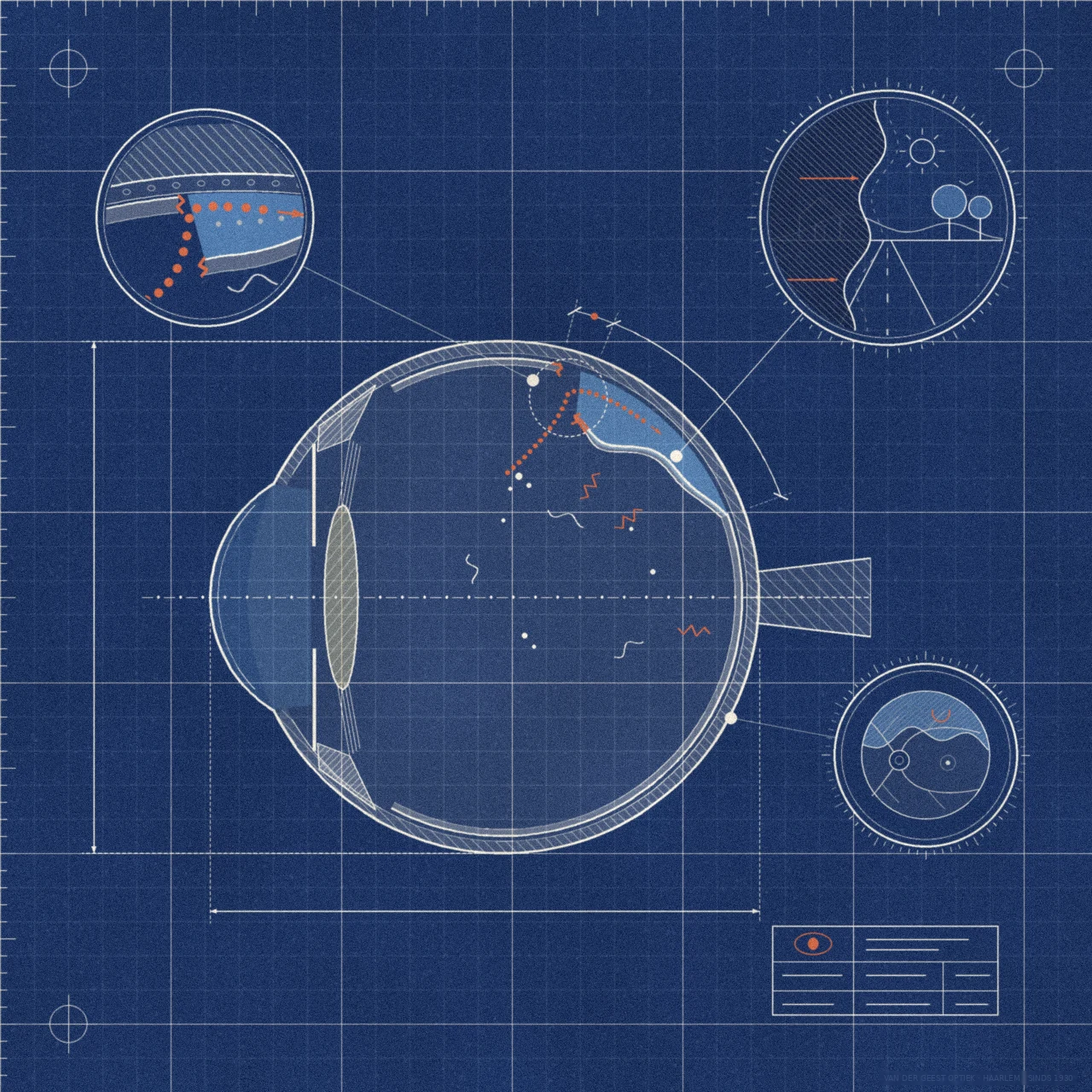
The retina is the thin layer of light-sensitive cells at the back of your eye. It captures light and sends signals to your brain. In the case of a retinal detachment, the retina separates from the layer beneath it and can no longer function properly. Without treatment, this leads to permanent vision loss, which is why it is always considered a medical emergency.
It usually starts with a retinal tear. The vitreous humor—the clear gel inside your eye—becomes more watery over time and can shrink. If it pulls on the retina as it shrinks, a small tear can form. Fluid then seeps through that tear behind the retina, causing it to detach. An eye injury or a hard blow to the eye or head can also cause a retinal detachment.
A vitreous detachment itself is usually not serious. It often causes floating spots in your vision; you can read more about this under “floaters.” Because a vitreous detachment can sometimes lead to a retinal tear, you should always take new or suddenly worsening symptoms seriously.
What are the symptoms of retinal detachment?
A retinal detachment doesn’t hurt, which is exactly why it’s important to recognize the signs. Often, you’ll first see flashes of light—usually in the same corner of your field of vision—or suddenly notice many new floaters, strands, or spiderwebs. If the retina detaches further, you’ll see a dark shadow or a curtain sliding across your vision from the edge. Your vision may also become blurry or less sharp.
If you have one or more of these symptoms, call your primary care physician or the after-hours medical service immediately. Your primary care physician will determine whether you need to see an ophthalmologist right away. The sooner treatment begins, the greater the chance that you will be able to preserve your vision. So don’t wait to see if it goes away on its own, and don’t schedule an eye exam if you have these symptoms—call your primary care physician first.
Flashes of light can also have other causes, such as migraines. In such cases, you’ll usually see a bright spot with colors and flickering in both eyes, which grows larger and disappears within half an hour. Read more about this under “ocular migraine.” If you’re unsure whether your symptoms are consistent with a retinal detachment, always call your primary care physician.
Who is at higher risk for retinal detachment?
Retinal detachment can happen to anyone, but some people are at higher risk. It is also more common in men. Known risk factors include:
- severe nearsightedness;
- Age: It occurs mainly between the ages of 50 and 70;
- a family history of retinal detachment;
- a previous retinal detachment in the other eye;
- a previous eye surgery, such as cataract surgery;
- an eye injury or a hard blow to your eye or head.
If you belong to one of these groups, it’s especially important that you recognize the warning signs. If you’re severely nearsighted, you’ll not only need glasses or contact lenses to see clearly, but you should also pay close attention to flashes of light and new spots in your vision. The same applies if you’ve previously had cataract surgery. In addition, severe eye damage caused by diabetes can lead to retinal detachment; read more about this under “Diabetes and Your Eyes.” On Thuisarts.nl, you’ll find more information about the symptoms and when to call your doctor.
Treatment and What the Optician Can Do
The ophthalmologist will examine your eye, usually after your pupil has been dilated. A small tear without detachment can often be sealed with laser treatment. If the retina has detached, surgery is needed as soon as possible. The ophthalmologist will determine the appropriate treatment. Sometimes more than one surgery is needed. After surgery, your eye may be red and sensitive for a while, and your vision may continue to change for months.
During an eye exam, we measure your prescription. We do not make a diagnosis, and such an exam is not a substitute for an evaluation by an ophthalmologist. Therefore, we cannot rule out retinal detachment. If you have the symptoms listed in the box above, making an appointment with us is not the right first step. Please call your primary care physician or the after-hours medical service immediately, even if it is in the evening or on the weekend. If you have been treated and your vision is stable again according to your ophthalmologist, you are welcome to come in to have your prescription re-measured.
Frequently Asked Questions About Retinal Detachment
If you experience sudden flashes of light, a large number of new floating spots or strands, a shadow or curtain in your field of vision, or if your vision suddenly worsens, call your primary care physician or the after-hours medical service immediately.
No, a retinal detachment doesn't hurt. That's why it's important to recognize the warning signs and call immediately.
These include people who are severely nearsighted, people between the ages of 50 and 70, people with a family history of retinal detachment, and people who have had cataract surgery or suffered an eye injury.
We do not make a diagnosis and cannot rule out a retinal detachment. If you have any symptoms, call your primary care physician or the after-hours medical service immediately.
Do you have a question about your vision or your glasses? You can find us at 86 Generaal Cronjéstraat in Haarlem. Call us at 023 5254 131 or schedule an appointment using the online calendar on our contact page.
This information is general in nature and is not a substitute for medical advice. Van der Geest Optiek does not currently employ an ophthalmologist or a college-trained optometrist. As certified opticians, we will examine your eyes and, if in doubt, refer you to your primary care physician. No rights may be derived from the information on this page or from any apparent errors or typos.