What are multifocal glasses?
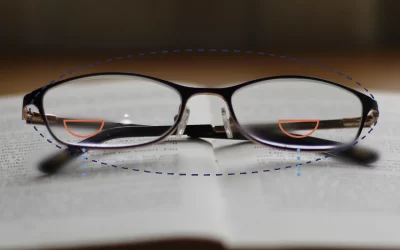
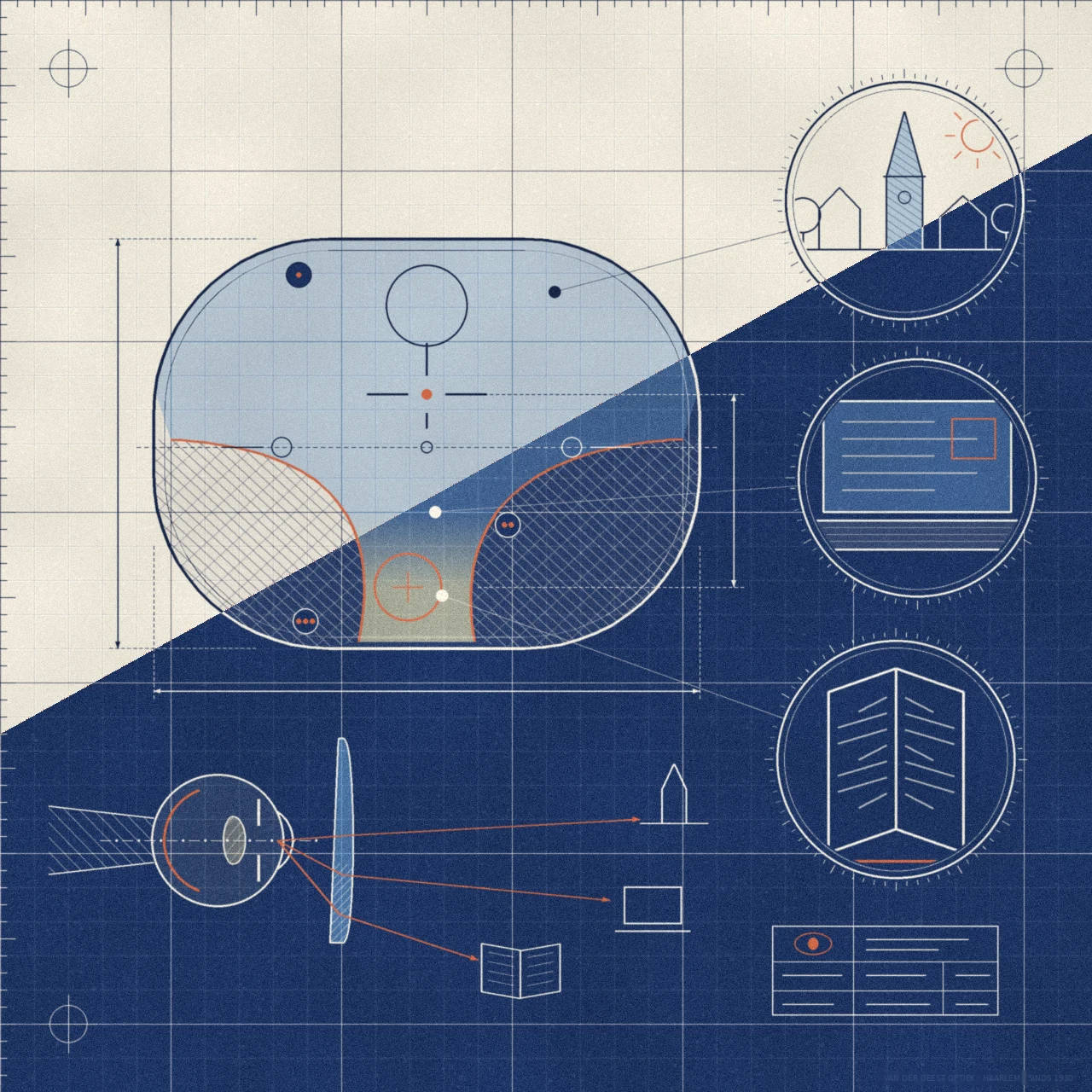
Multifocal glasses have lenses with multiple prescriptions in a single lens, with no visible line. The top part of the lens allows you to see clearly into the distance, the middle part for intermediate distances—such as your dashboard or computer screen—and the bottom part for close-up tasks, like reading. The prescription gradually changes from top to bottom, so you can see clearly at any distance without having to change glasses.
You may also hear the term “varifocal” used sometimes. This isn’t a different type of lens, but simply another name for a multifocal lens; we usually just refer to them as multifocal. A multifocal lens is, however, different from a bifocal lens. A bifocal lens has two different prescriptions separated by a visible line, and as a result, it doesn’t provide clear vision at intermediate distances. Read more about what bifocal lenses are and how they differ from multifocal lenses.
People often choose multifocal glasses between the ages of 40 and 45, when reading becomes more difficult due to presbyopia. If you already wear glasses for distance vision, you won’t have to keep putting on and taking off a separate pair of reading glasses. However, multifocal glasses aren’t the best choice for everyone. If you spend a lot of time working at a computer screen, computer glasses are often a more comfortable option, and if you only need a little help with close-up vision, custom-made reading glasses will suffice.
How to Get Used to Your Multifocal Glasses
Because the prescription varies across the lens, it takes some getting used to. The image is slightly less sharp at the edges of the lens, and you’ll naturally learn to turn your head just a little more instead of just moving your eyes. Most people get used to it within a few days to two weeks. These tips will help you adjust faster:
- Wear your new glasses all day, and don't keep switching back and forth with your old ones.
- Look with your nose: turn your head toward what you want to see, instead of just your eyes.
- To read, use the lower part: lower your eyes and keep your chin slightly raised.
- On stairs or a sidewalk, look through the top part; to do this, tilt your head forward slightly.
- Take it easy for the first few days, until you're fully accustomed to it.
If you're still having trouble after a few weeks, or if you find yourself having to search for the sharp part of the image, come see us. Often, simply having your glasses refitted is enough to ensure the lenses are at the correct height for your eyes.
Custom Work: Measuring, Centering, and Selecting the Right Lenses
With multifocal glasses, the measurements must be very precise, because the zones for distance, intermediate, and near vision must be positioned exactly at the correct height. After the eye exam, you’ll choose a frame, and we’ll use Nikon’s digital measuring station to determine, among other things, your line-of-sight height for each eye, your reading distance, and your natural posture. The frame must also be tall enough to accommodate these measurements; otherwise, not all zones will fit within the lens. Read why every millimeter counts.
The lenses themselves also make a difference: the wider the zones through which you see clearly, the faster you’ll adjust and the more comfortable your vision will be. Our main supplier is Nikon, and we also offer a selection of other well-known brands and budget brands. Multifocal lenses start at €115 per lens; to find out how much a complete pair of glasses costs, see “How much do glasses cost?” We grind the lenses in our own grinding shop, and your glasses are usually ready within about two weeks. If you buy your glasses from us, or if it turns out that you don’t need a vision solution or that we can’t help you further, the eye exam is free of charge.
Multifocal lenses come in various types. A simpler lens is a good, affordable choice. More expensive lenses are customized more precisely to your needs—for example, based on your frame, how the glasses sit on your face, and your reading distance. As a result, the zones where you see clearly are wider, you’re less likely to feel like the world is moving with you when you walk or turn your head, and you’ll often see small print better in low light. You’ll also usually get used to these lenses more quickly. Which lenses are right for you depends on your prescription, your work and hobbies, and your budget; we’ll discuss this during your lens consultation.
Frequently Asked Questions About Multifocal Glasses
Most people get used to them within a few days to two weeks. Wear the glasses all day and don't switch back and forth with your old glasses.
That's a characteristic of multifocal lenses, because the prescription varies gradually. You get used to it by turning your head slightly more. Wider zones make the difference less noticeable.
Yes. You look into the distance through the upper part and at your dashboard through the middle. Drive carefully for the first few days, until you get used to it.
Multifocal lenses start at €115 per lens. You’ll also choose a frame. The exact price depends on your prescription and your choices. We always discuss this with you beforehand.
Need a pair of multifocal glasses? You can find us at 86 Generaal Cronjéstraat in Haarlem. Call us at 023 5254 131 or schedule an appointment using the online calendar on our contact page.
No rights may be derived from the information on this page or from any apparent errors or typos.