What is a lazy eye?
In the case of a lazy eye—known in medical terms as amblyopia—one eye develops less well than the other. The eye itself is usually healthy, but during the first years of life, the brain has relied primarily on the image from the other eye. As a result, the lazy eye has not learned to see clearly. Glasses alone will not immediately make vision completely clear, because the problem lies in the brain and not just in the prescription.
A lazy eye can have various causes. Often, there is a significant difference in prescription between the two eyes—for example, if one eye is much more farsighted or has more astigmatism. Strabismus can also play a role: if the eyes do not look in the same direction, the brain suppresses the image from the deviating eye. Sometimes something else obstructs vision, such as a drooping eyelid.
Children often don’t notice a lazy eye themselves. They don’t know any different and can see just fine with their good eye. That’s why a lazy eye is usually detected during eye exams at pediatric health clinics, or because parents notice something, such as an eye that looks different or a child who keeps squinting one eye shut. The younger a child is when a lazy eye is detected, the better the chances are of stimulating the development of their vision.
Who treats a lazy eye, and what do we do?
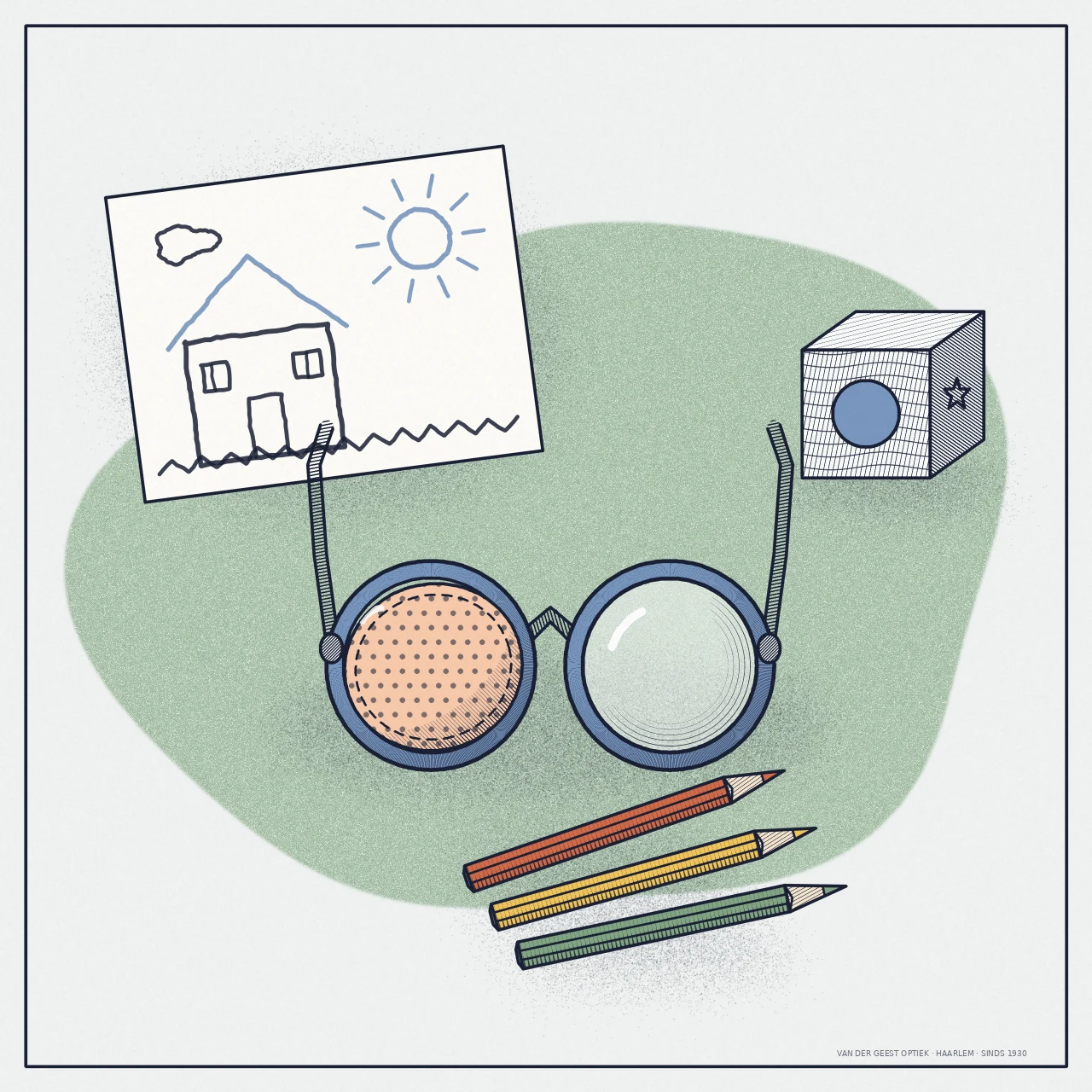
If you have concerns about your child’s eyes, contact your family doctor or the child health clinic. If necessary, they will refer you to an orthoptist or ophthalmologist. These specialists will examine your child’s eyes and determine whether treatment is needed. Treatment often involves glasses, sometimes combined with temporarily covering the healthy eye with an eye patch, so that the lazy eye has to work harder. The orthoptist or ophthalmologist will discuss with you exactly how this works and how long it will take.
We do not treat lazy eye ourselves and do not perform eye exams on children until they are about 9 or 10 years old. For younger children, you should first see your family doctor, who will refer you to an ophthalmologist if necessary. Has the ophthalmologist prescribed glasses? If so, we’d be happy to make those glasses for your child based on the prescription. You won’t need to have an eye exam done at our store first—you can choose a frame right away together with your child.
A good pair of children’s glasses is especially important for a lazy eye, because your child will need to wear them all day. Together, we’ll find a sturdy and comfortable frame that stays in place, with lightweight plastic lenses. Is your child 9 years old or older? If so, read more about our eye exams for children.
Frequently Asked Questions About a Lazy Eye
In lazy eye, or amblyopia, one eye has not developed the same level of visual acuity as the other during childhood. The eye itself is usually healthy, but the brain primarily uses the image from the other eye.
An orthoptist or ophthalmologist. If you're unsure, contact your family doctor or the child health clinic; they will refer you if necessary.
We perform eye exams for children starting at around 9 or 10 years old. For younger children, you should first see your family doctor, who will refer you to an ophthalmologist if necessary.
Yes. With a prescription from an ophthalmologist, we’ll make glasses for every child. In that case, there’s no need for an eye exam at our store; you can choose a frame right away together.
Has the ophthalmologist prescribed glasses for your child? You can find us at 86 Generaal Cronjéstraat in Haarlem. Call us at 023 5254 131 or schedule an appointment using the online calendar on our contact page.
This information is general in nature and is not a substitute for medical advice. Van der Geest Optiek does not currently employ an ophthalmologist or a college-trained optometrist. As certified opticians, we will examine your eyes and, if in doubt, refer you to your primary care physician. No rights may be derived from the information on this page or from any apparent errors or typos.