What does the index of a lens mean?
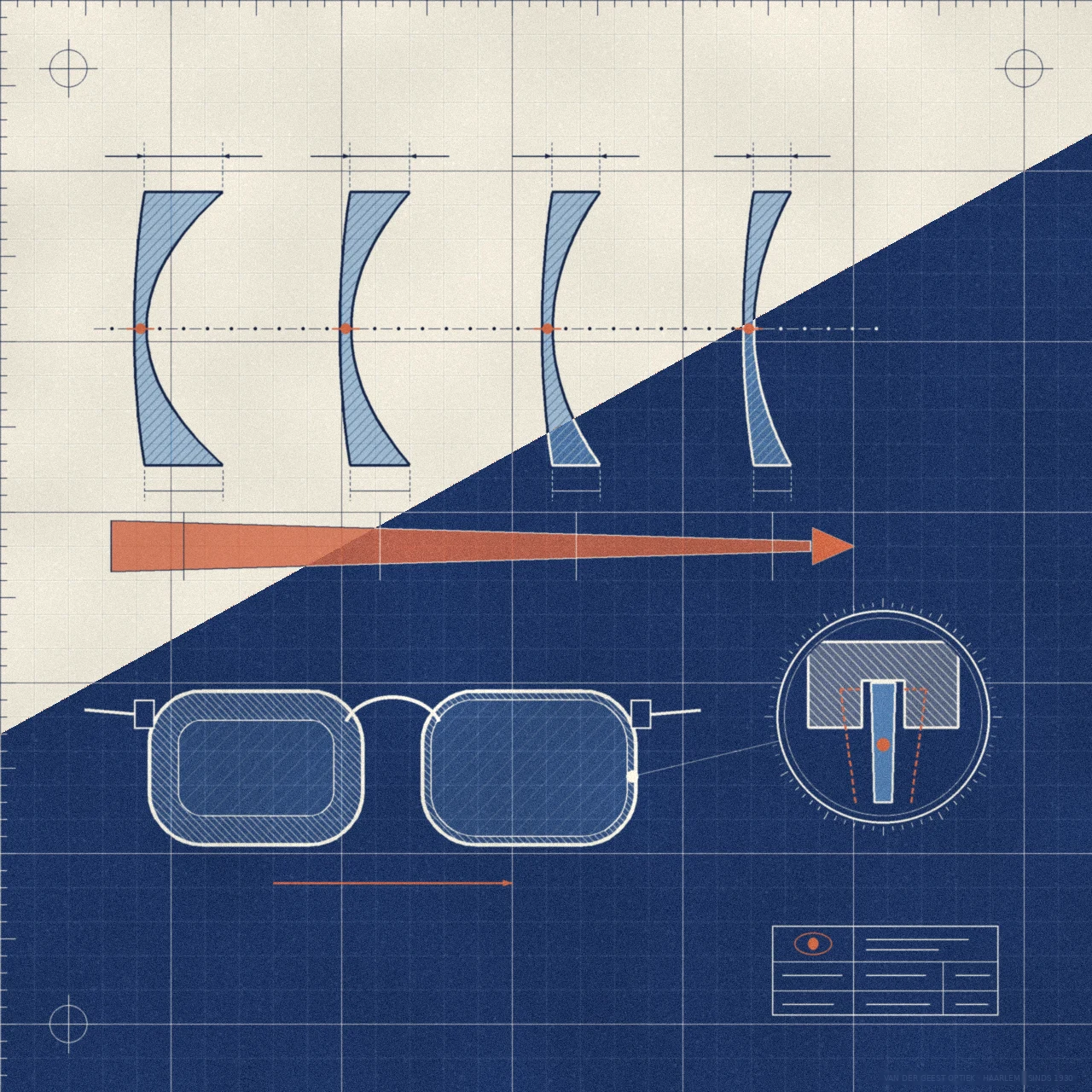
Thin eyeglass lenses have a higher index. The index, also known as the refractive index, indicates how strongly a material refracts light. The higher the index, the more the material bends the light. As a result, less material is needed for the same prescription strength, and the lens becomes thinner and lighter. You can see this difference most clearly with higher prescription strengths.
For plastic eyeglass lenses, you can choose from four refractive indices:
- Index 1.5: the standard lens. Ideal for low prescriptions.
- Index 1.6: thinner and lighter than standard glass, a good choice for medium-strength lenses.
- Index 1.67: noticeably thinner, for greater strength.
- Index 1.74: the thinnest plastic lens, offering high strength.
How thick a lens is depends on your prescription. If you’re nearsighted, you’ll have a minus lens that’s thickest at the edge. If you’re farsighted, you’ll have a plus lens that’s thickest in the center. In addition to plastic, there’s also mineral glass; read more about the difference between plastic and mineral glass.
Which index is right for your prescription?
There’s no hard-and-fast rule, because the best index depends on your prescription, your frames, and your preferences. For a low prescription, the difference between the indices is small, and a standard lens is often a great choice. As your prescription strength increases, a higher index offers more and more benefits: a thinner rim, less weight on your nose, and a more attractive appearance. Additionally, the image through a thinner lens is less magnified or reduced, making your eyes look more natural to others.
When you have a high prescription, it’s not just the index that makes a difference—the shape of the lens does, too. A flatter, aspheric lens design makes the lens thinner and lighter and reduces distortion. Your eyes will appear less small, and you’ll see more clearly all the way to the edge of the lens. We’ll discuss which design is right for your prescription during your lens consultation.
Your frame plays just as important a role. A smaller frame and a shape that fits your eyes well allow for thinner lenses. Precise centering of the lenses also helps: if the optical center is positioned exactly in front of your pupil, the lens can often be ground thinner. If you choose a higher index, we always recommend a good anti-reflective coating. This is because a lens with a higher index reflects more light, and an anti-reflective coating ensures that you see clearly and that others can see your eyes clearly. You choose a coating when your lenses are being made; read more about coatings on eyeglass lenses.
Personalized Glass Advice
We’ll discuss which index is best for you when we help you choose your frames. We’ll consider your prescription, the frames you like, and how you use your glasses, and give you honest advice on whether thinner lenses are worth it. Our main supplier is Nikon, and we also offer a selection of many well-known brands and budget brands. Read more about our personalized lens advice. If you’re unsure between two lens indices, we’d be happy to show you the difference so you can decide for yourself what the benefits are.
Thinner lenses cost more than standard lenses. The exact cost depends on your prescription, the refractive index, and the coating, so feel free to ask us for a price quote tailored to your situation. You can find out how much a complete pair of glasses costs under “How Much Do Glasses Cost?” We take measurements using Nikon’s digital measuring station and grind the lenses in our own lens-grinding facility to ensure they fit your frames perfectly.
Frequently Asked Questions About Thin Lenses
The index indicates how strongly the material refracts light. The higher the index, the thinner and lighter the glass is for the same thickness.
For plastic lenses, you can choose from refractive indices of 1.5, 1.6, 1.67, and 1.74. The 1.74 index is the thinnest plastic lens.
With a low prescription, the difference is minimal. With a higher prescription, thinner lenses make your glasses lighter and more stylish. We’ll give you personalized advice on which index is right for you.
Yes, thinner lenses cost more than standard lenses. The price depends on your prescription, the refractive index, and the coating; feel free to ask us for a quote based on your specific situation.
Would you like thinner lenses? Stop by Generaal Cronjéstraat 86 in Haarlem for personalized lens advice. Call us at 023 5254 131 or schedule an appointment using the online calendar on our contact page.
No rights may be derived from the information on this page or from any apparent errors or typos.